The ever-expanding calendar of commemorative moments creates continued opportunities for organizations to communicate with stakeholders, honor the milestone, and build connections with their audiences.
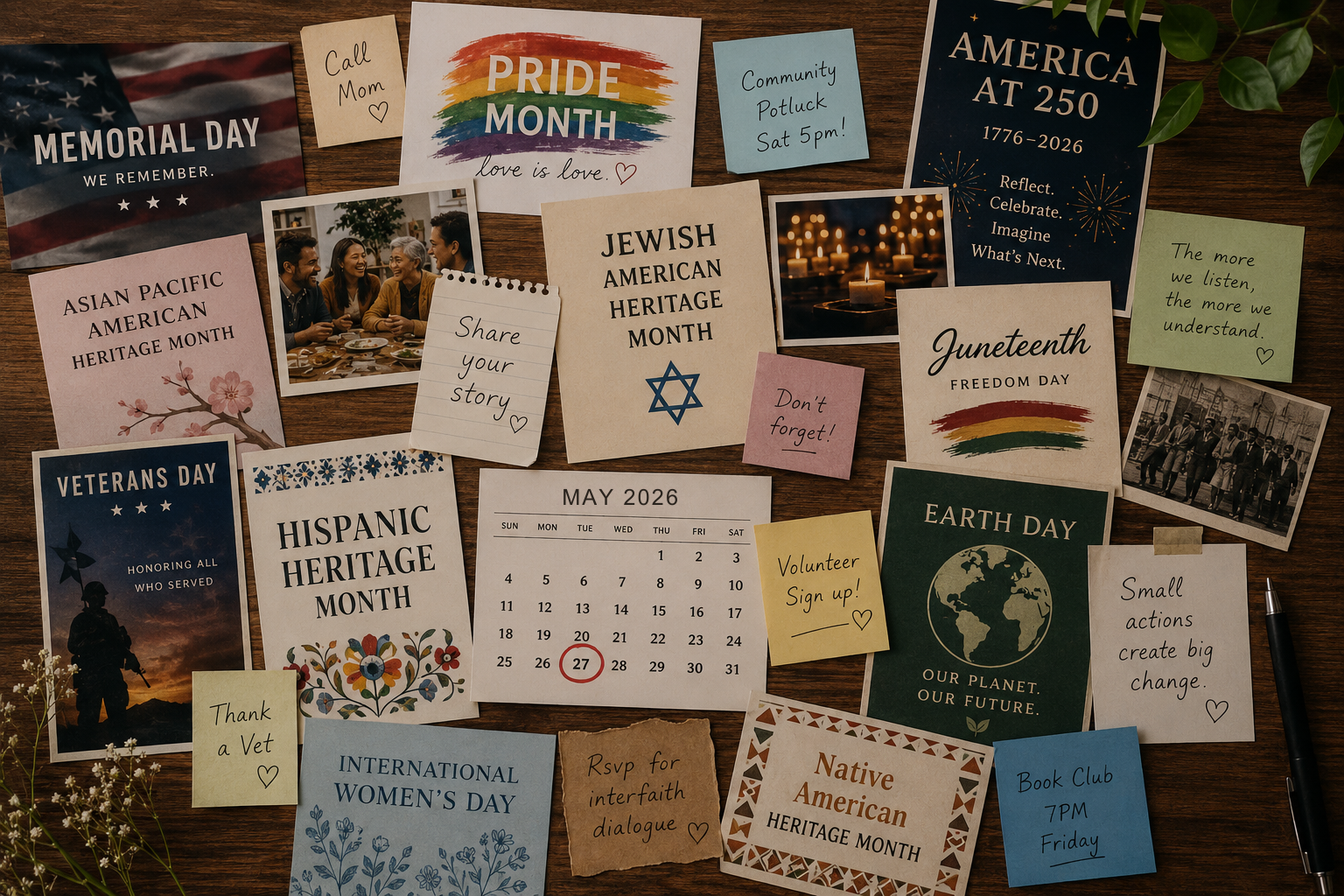
Memorial Day earlier this week. Pride Month starting next week. America at 250 after that. And heritage celebrations, awareness campaigns, and days of recognition throughout.
Some of these moments create genuine cultural connections… while others feel procedural and forgettable. Why is that?
This month, we found ourselves thinking about that question while working with several groups around Jewish American Heritage Month. Each May, these groups recognize the month by sharing graphics, posting historical facts, spotlighting influential Jewish Americans, and promoting events.
Sometimes, the moments resonate, as with a celebration we attended at Austin City Hall. Yet at other times, they feel quieter than other cultural celebrations. Less visible. Less emotionally present in public culture.
In an age of increased polarization and antisemitism, there are many underlying political and societal reasons for that. From a communications perspective, part of the reason is also that recognition alone does not create a connection — storytelling does.
The campaigns that resonate most — whether around Memorial Day, Pride Month, July 4, or Jewish American Heritage Month — are rarely built on statements or Instagram posts. They create participation. They invite people into stories, traditions, humor, music, food, family memories, and lived experiences.
Here are three ways organizations can make commemorative moments more meaningful.
1. Move beyond facts and into lived experiences.
Historical milestones matter, but people connect most deeply to stories. Instead of only spotlighting achievements or timelines, share personal narratives. A student describing a family tradition. A community member sharing a recipe. The Austin mayor talking about playing Tevye in his Oklahoma high school production of Fiddler on the Roof.
2. Create participation, not just visibility.
The most successful cultural campaigns invite audiences to engage, not simply observe; to build opportunities for dialogue rather than relying only on polished messaging. For example, Case Western Reserve University this spring put out a call for students, faculty, and staff to share personal stories for Jewish American Heritage Month, including how it tied back to their journey to CWRU.
Connection grows through participation.
3. Don’t communicate complexity away.
One reason many organizations struggle with heritage or milestone communication is that identity itself is layered, personal, and often difficult to summarize neatly. Faced with that complexity, institutions often default to overly careful language that feels distant or abstract.
It would be easy to use the 250th anniversary solely for celebration or (sadly, for some groups) denunciation of the American experiment. But the University of Chicago is going deeper, sponsoring courses and events that celebrate American greatness while “also examining the tensions and challenges that have defined it from the start.”
At its best, commemorative communication does more than acknowledge a calendar moment. It creates curiosity. Conversation. Recognition. Sometimes even action.
In the end, people don’t remember the institutional statement.
They remember the story that made them pause, laugh, reflect, call someone they love, try a family recipe, ask a question, or see a community differently than they had before.
And that’s what meaningful communication should strive for and what BandOne can help your organization achieve.