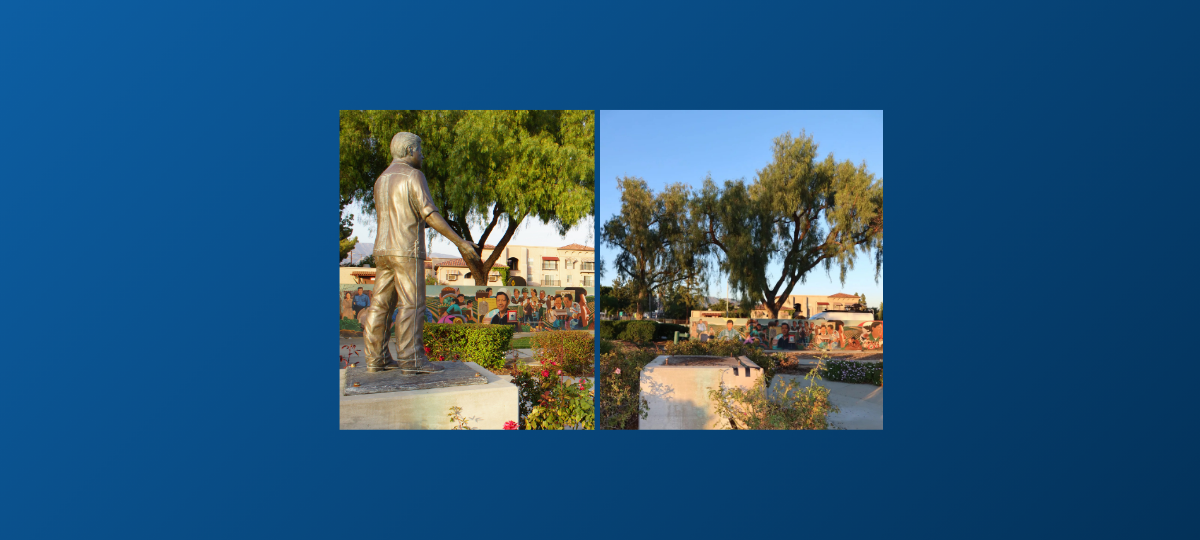
As universities, governments, and nonprofits quickly remove Cesar Chávez’s name from streets, buildings, and celebrations, or take down statues of the farmworker rights leader, I’m reminded of the movement a decade ago to remove Confederate imagery and statues.
I was in communications leadership at The University of Texas at Austin in 2015 when we took down two statues, including Confederate President Jefferson Davis, after the mass shooting at a Black church in South Carolina, in which the killer invoked the Confederate flag; and again in 2017, when we removed Robert E. Lee and other statues after the Charlottesville march.
There are, of course, differences between these moments. Confederate statues were tied to a cause understood to be on the wrong side of history and a worldview that made some students feel unwelcome the moment they arrived on campus. Chávez — the late United Farm Workers co-founder and labor icon — is now accused of being a serial sexual predator. And even those who strongly believe in his movement realize it’s time to separate the cause from the man.
Still, there are a few key lessons from the removal of Confederate statues that can guide leaders facing this moment.
1. Distinguish between remembering history and celebrating it.
When UT took down the Davis statue, it didn’t disappear, but was put on display as part of an exhibit at the Briscoe Center for American History. That distinction matters. Instead of celebrating the man, visitors now engage in serious discussion about his role in history and the “Lost Cause” movement that put him on a pedestal, literally and figuratively. Likewise, it’s fitting to stop celebrating Chávez as an individual, given what we now know. But efforts that go beyond changing names to removing his name from relevant history lessons will do far more harm than good for our collective understanding.
2. Think hard about how to fill the “symbolism vacuum.”
Taking something down is the first decision. The next is what, if anything, should replace it. At UT, there has been an ongoing debate for a decade about whether to put new statues in the empty spaces. And this spring, some municipalities and groups have already pivoted from “Cesar Chávez Day” to “Farmworkers Appreciation Day.”
So who comes next when a Chávez statue comes down? Dolores Huerta? Charlie Kirk? These ideas are already being floated. Leaders should recognize that debate over replacement symbols becomes its own political battleground and that their decisions today will shape the understanding of history for decades.
3. Build a long-term strategy and comms plan — this won’t be the last.
The Chávez revelations may feel unique. But celebrated figures regularly face new allegations or historical reassessment. Instead of addressing this on an ad hoc basis, institutions should develop a clear framework for evaluating public honors, which recognizes that good policy and strong communications are intertwined. It should be grounded in their community’s values, attuned to how an array of stakeholders — students, alumni, funders — will respond, and clear enough to guide the next decision, not just this one.
Throughout it all, these decisions should be collaborative, but not committee-driven.
The best leaders gather input and identify needs and risks. They empower their policy, legal, facilities, and communications teams to work together. And they act quickly, with a framework and guidelines that empower them to defend their decisions confidently — even when they draw inevitable scrutiny.